



My role
Content strategist, writer, and editor. I defined the campaign idea, wrote the style guide, built the message hierarchy, drafted and edited every asset, and set up the measurement plan and approval workflow.
Supporting artifacts
Seven samples, each linked as a PDF.
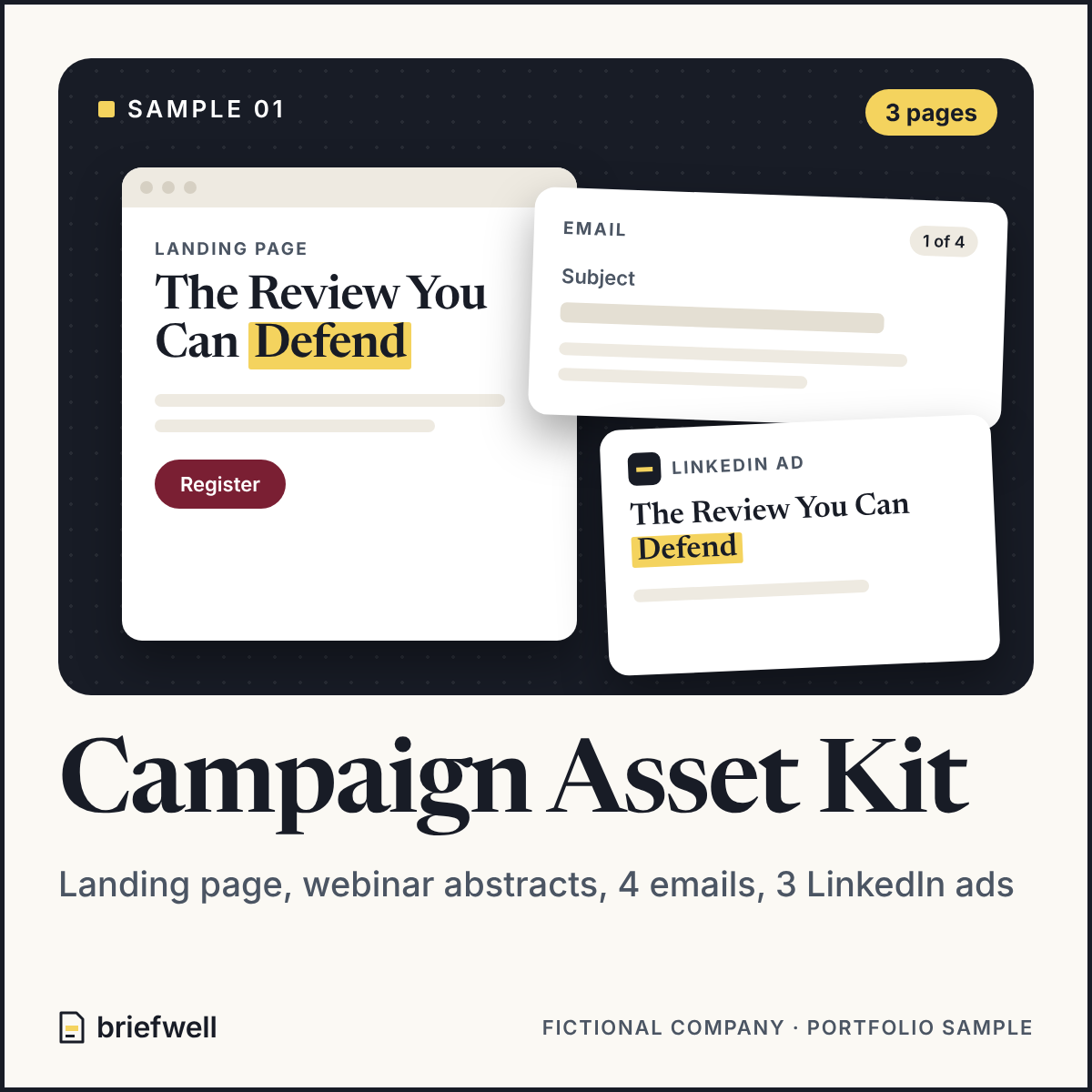
01 Campaign Asset Kit (3 pages). Landing page, webinar abstracts, a four-email sequence, and three LinkedIn ads.
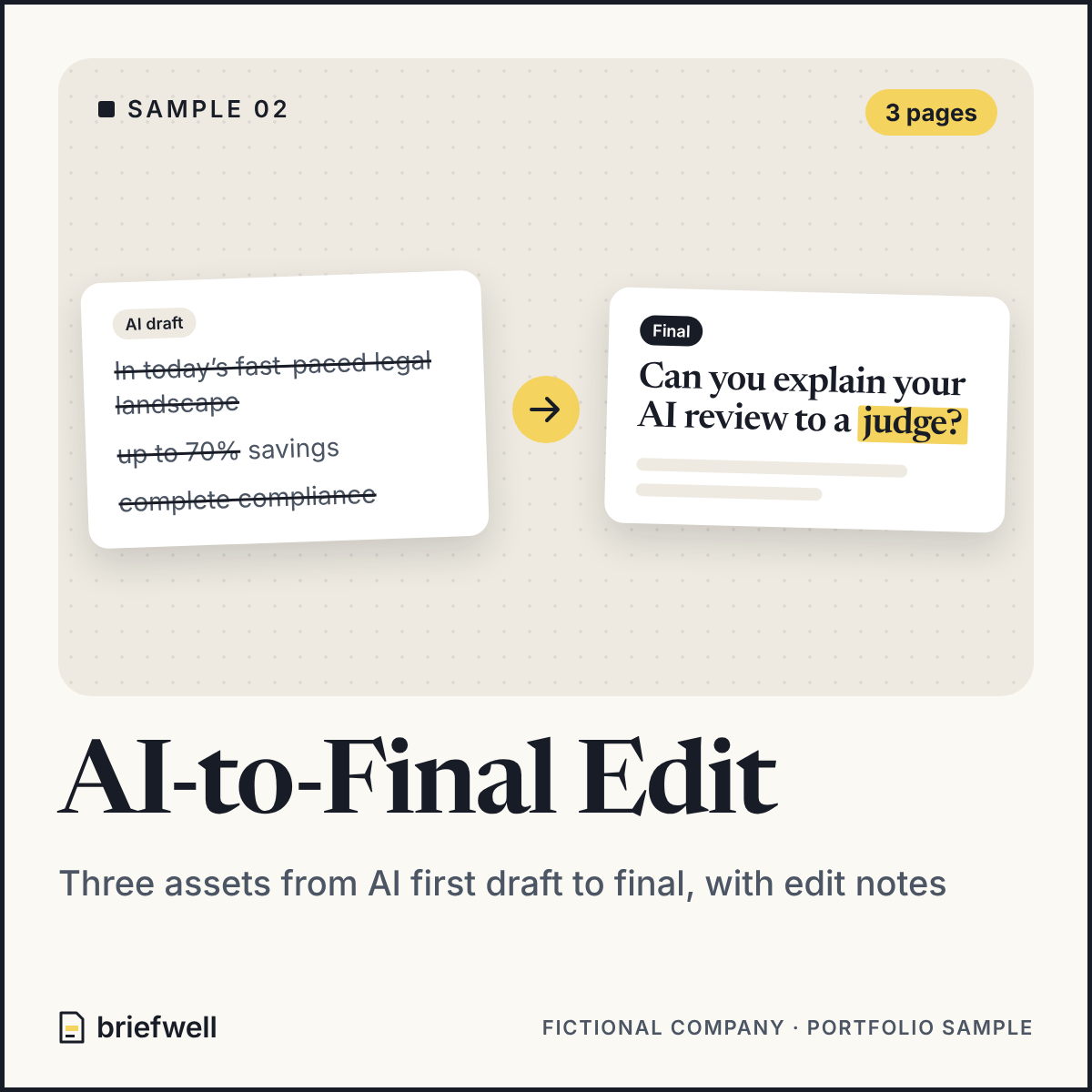
02 AI-to-Final Edit (3 pages). Three assets shown from AI first draft to publishable, with the reason for each edit and the checklist I use.
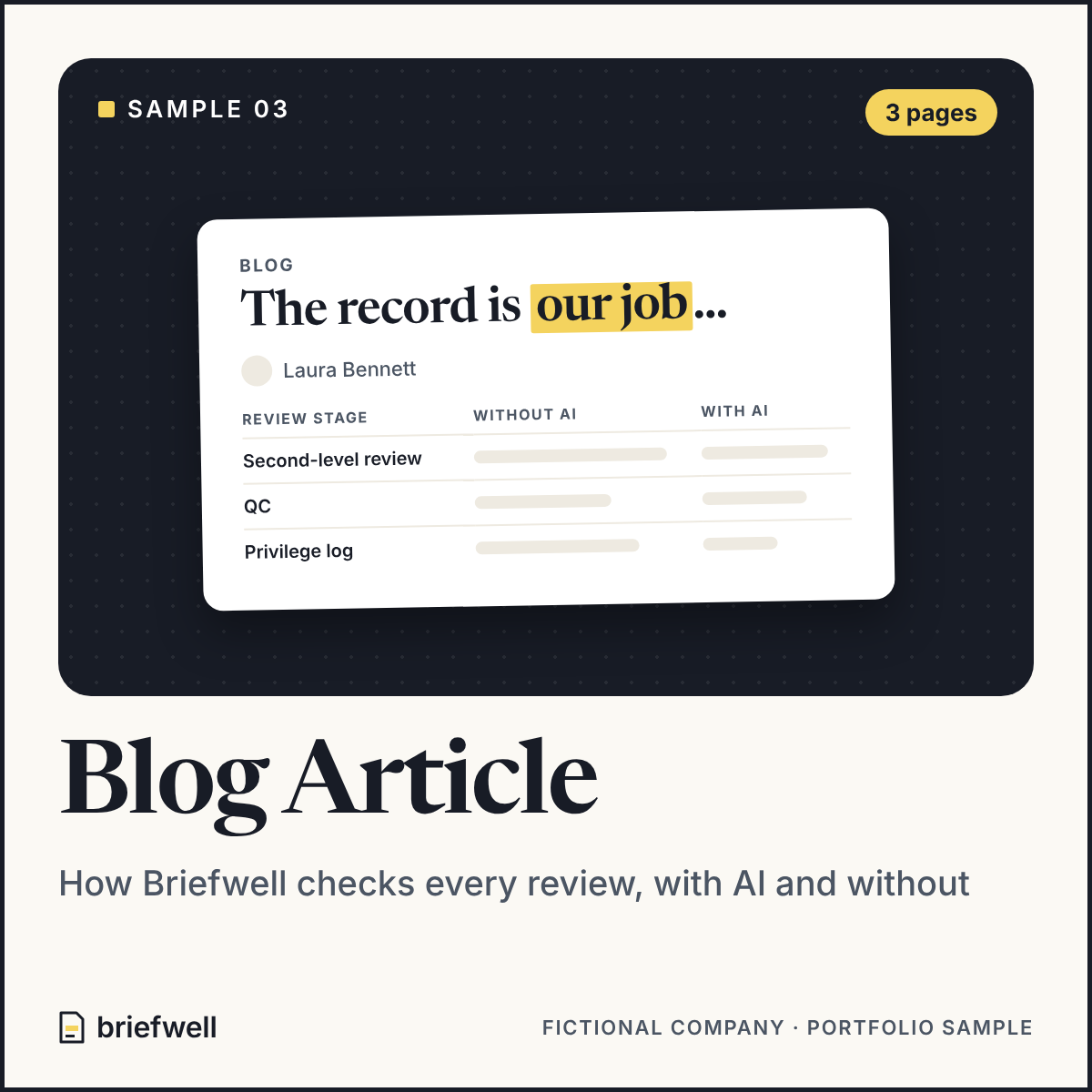
03 Blog Article (3 pages). A service-focused post on how Briefwell checks every review, with AI and without, written for search and AI visibility and ending with the webinar invitation.
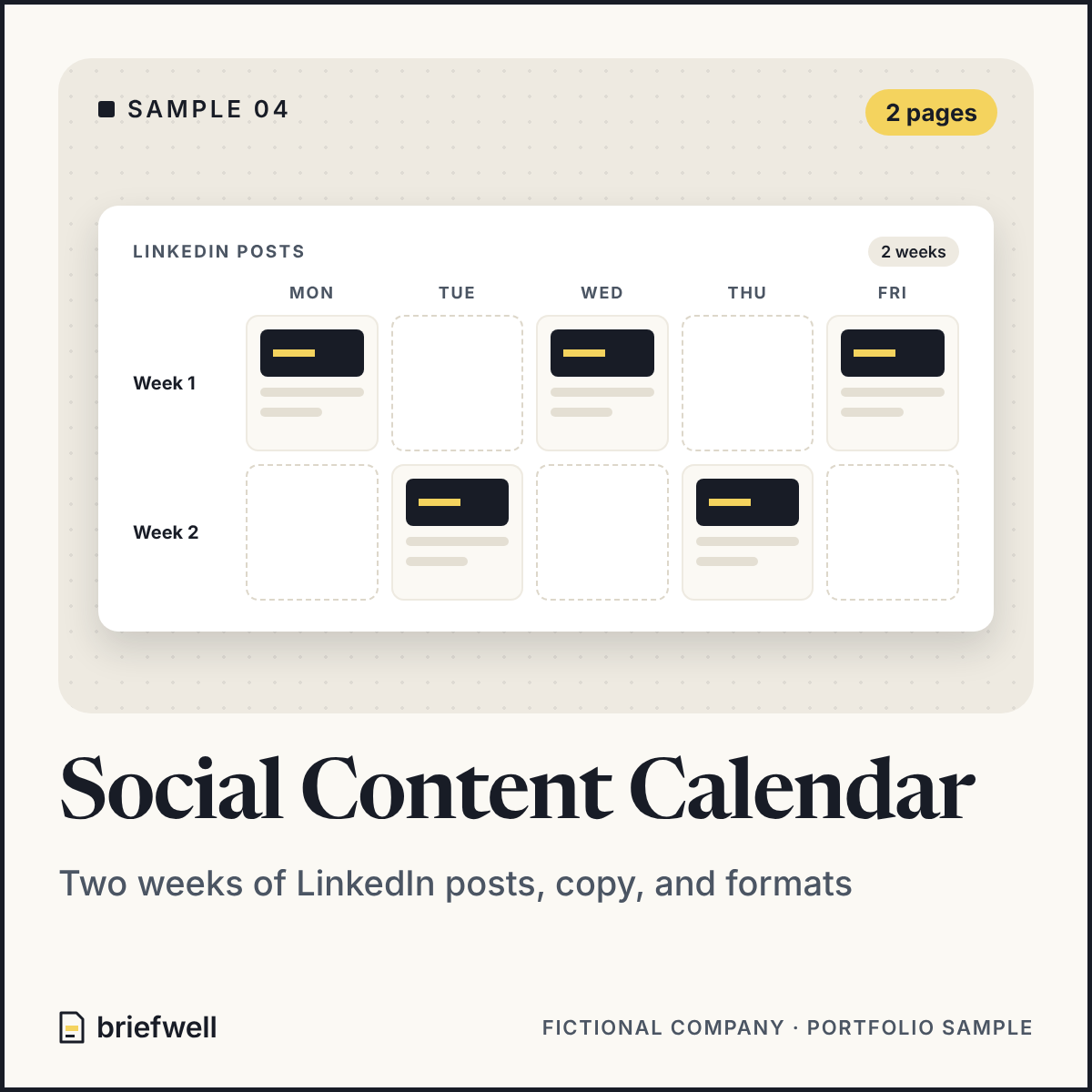
04 Social Content Calendar (2 pages). Two weeks of LinkedIn posts with copy, formats, and working rules.
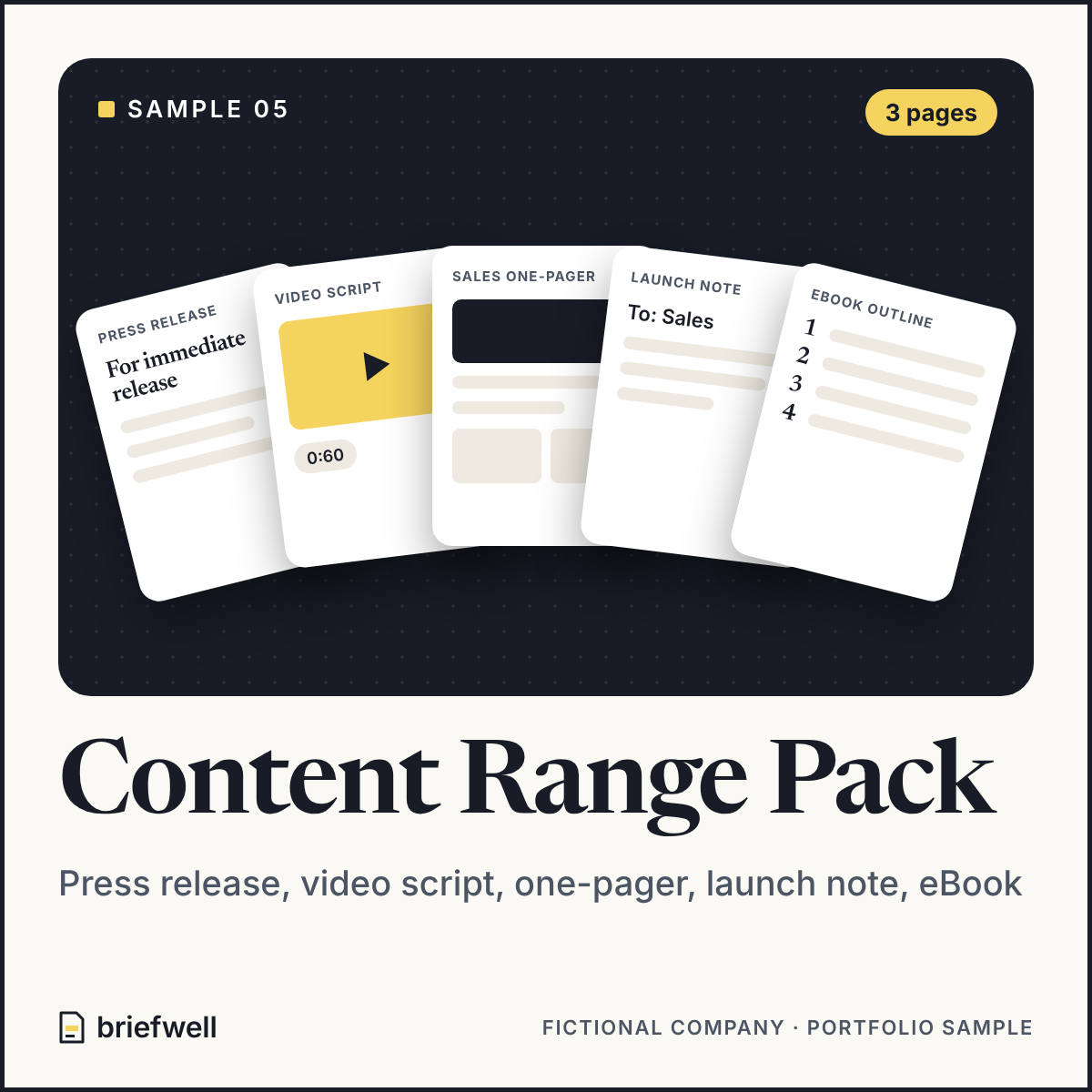
05 Content Range Pack (3 pages). The same message as a press release, a 60-second video script, a sales one-pager, an internal launch note to sales, and an eBook outline.
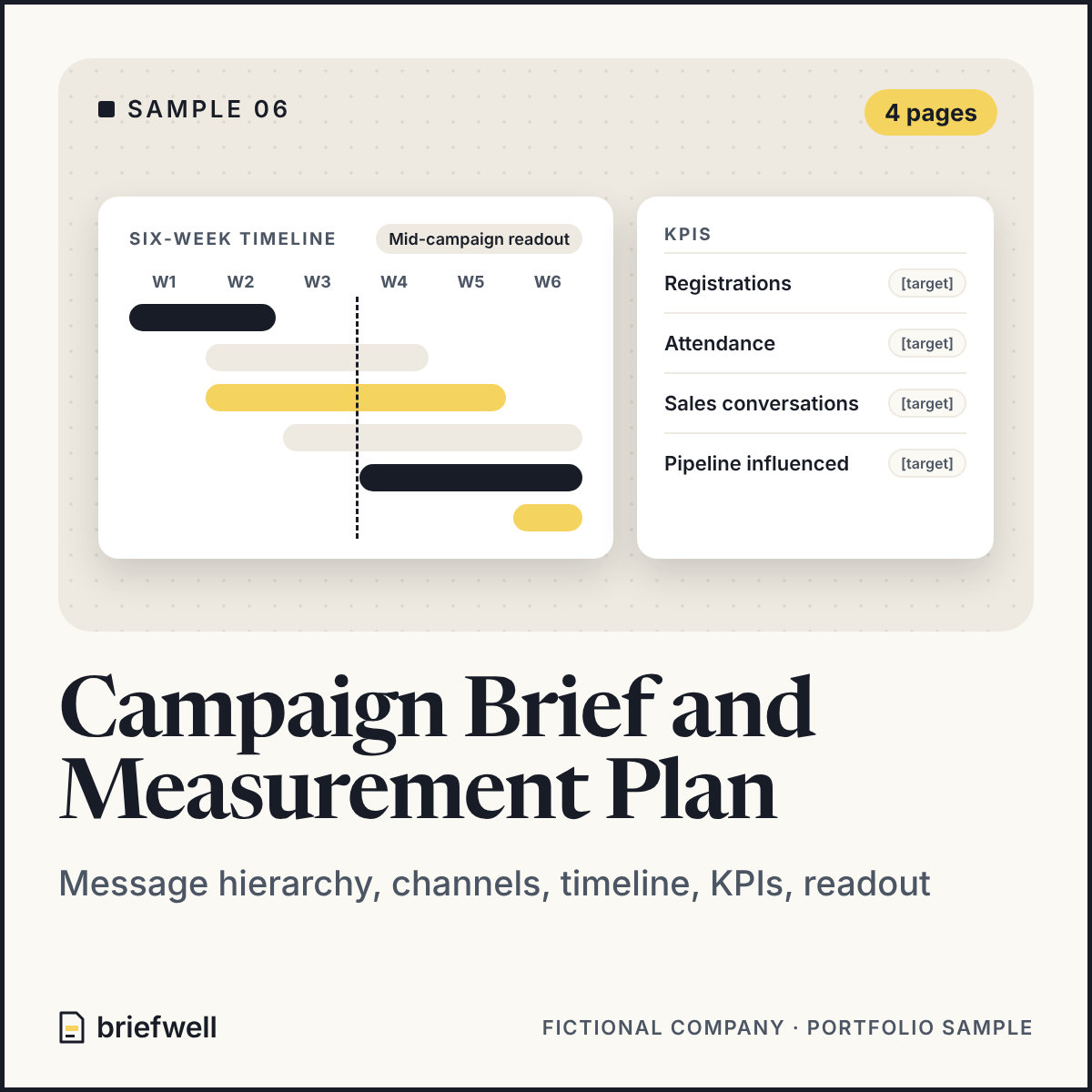
06 Campaign Brief and Measurement Plan (4 pages). Problem, message hierarchy, segments, channel plan, six-week timeline, review and approval workflow, KPIs, a mid-campaign readout template with optimization rules, and risks.
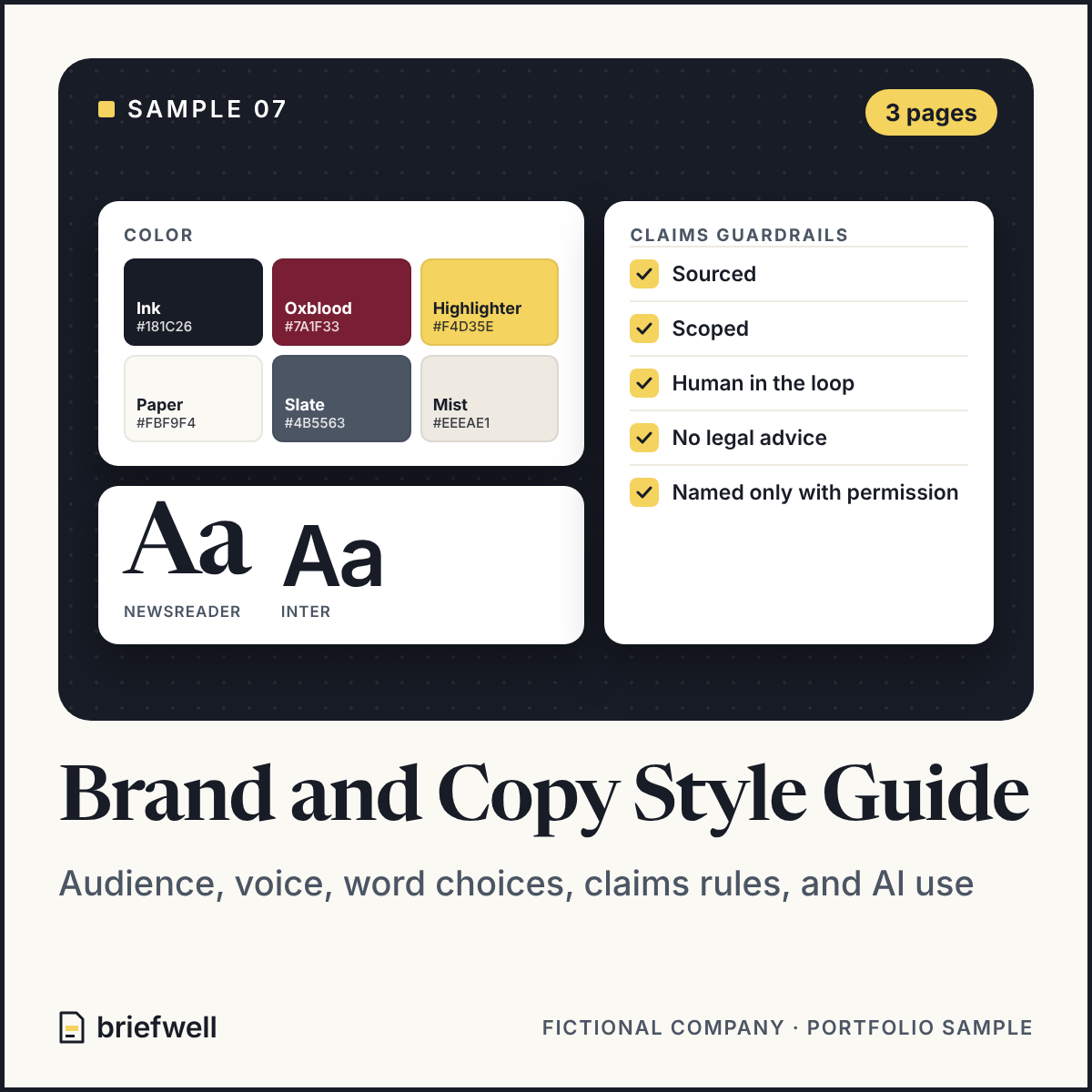
07 Brand and Copy Style Guide (3 pages). Audience, voice, word choices, claims guardrails, and rules for using AI in the writing process.
The challenge
Legal readers are skeptical by training. They notice a weak claim in a sentence, and they do not forgive hype. A content program for this audience has to be precise, sourced, and useful, and it has to move quickly across email, social, paid, and web without any piece outrunning the product.
The approach
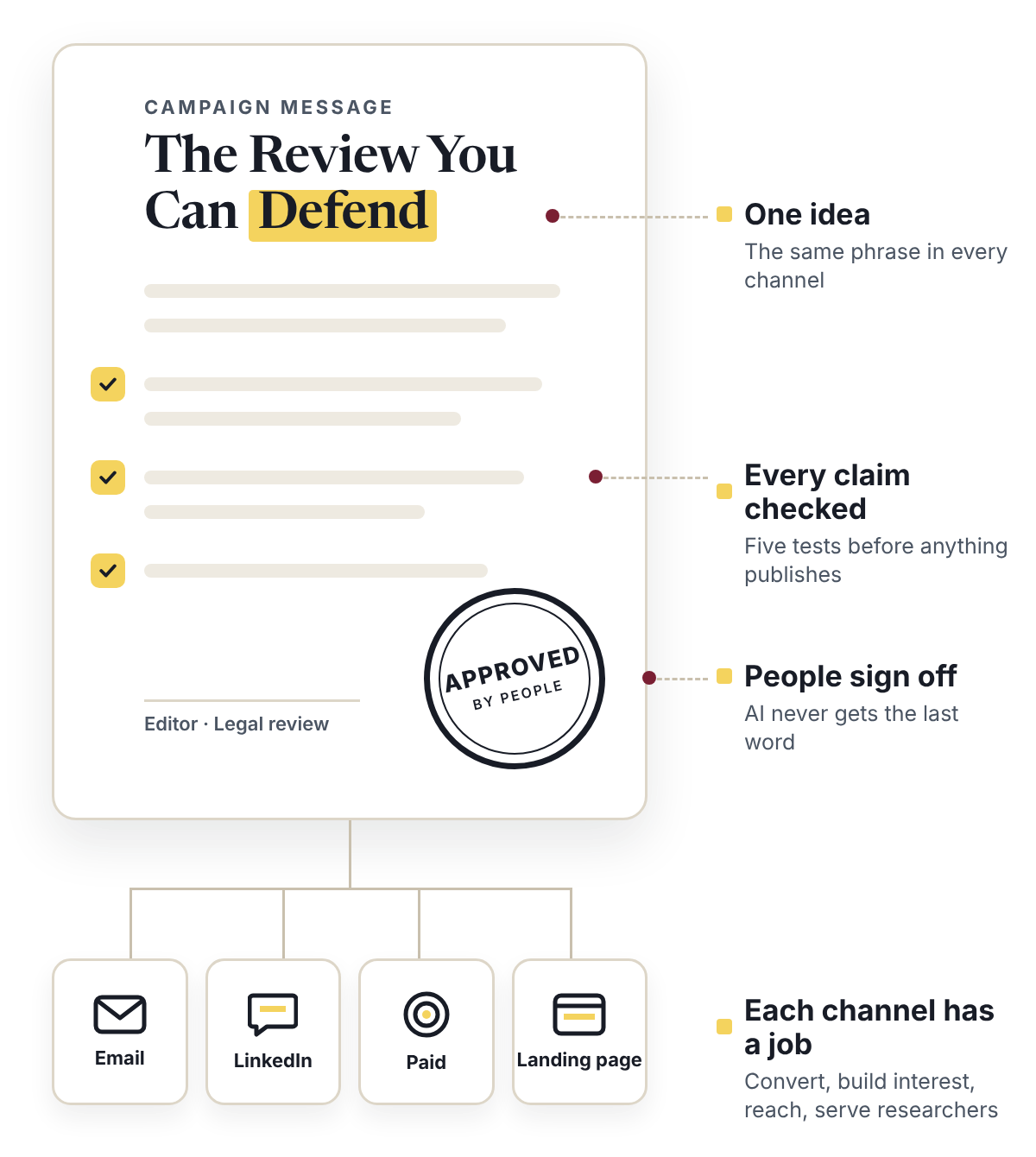
One idea: defensible by design. The campaign asks a question buyers already carry, then answers it with a working session instead of a pitch. Repeating one phrase everywhere means readers recognize it the second time.
Claims guardrails before copy. Legal readers notice a weak claim, so every claim has to pass the style guide’s tests. Anything without a source stays a placeholder and cannot publish.
Channels with jobs. Each channel does one thing instead of repeating the same announcement everywhere.
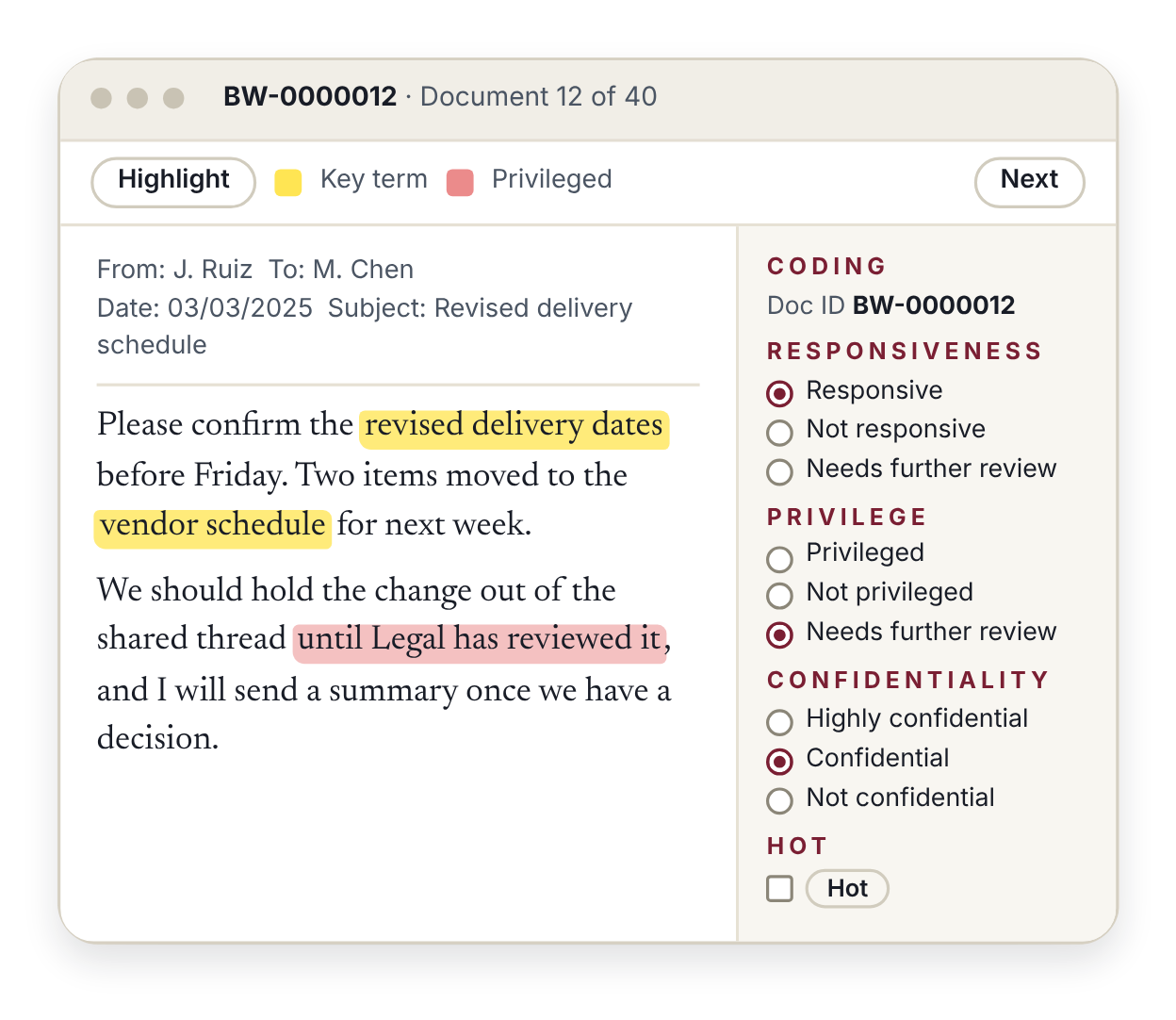
An approval workflow that fits legal review. AI speeds up the early work. It never gets the last word on a claim, a number, or a quote.
From Draft to Polish
The AI-to-Final Edit shows the part of the work that decides quality. A typical first draft opens with "In today's fast-paced legal landscape," promises "up to 70%" savings, and guarantees "complete compliance." The final removes unsourced numbers and legal conclusions, drops hype words, and opens with the question a real reader would ask.
Measurement
The plan tracks registrations, registration rate by channel, target-account registrants, attendance and replay views, sales conversations started, and pipeline influenced, with the attribution method named. Targets are fictional because real ones would come from a company's data. Results are reviewed weekly during the campaign and in full at Week 6.
The Takeaway
B2B content works when it respects the reader's skepticism. This project shows how I build a campaign from a single honest idea, keep every claim traceable, use AI to move faster without lowering the bar, and measure what happened.